
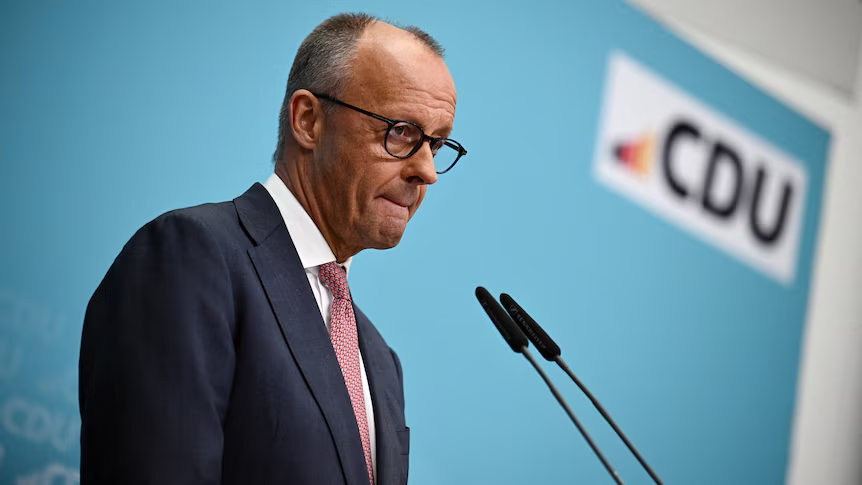
Germany held simultaneous state elections in Berlin and Mecklenburg-Western Pomerania on Sunday, producing sharply different results that together painted a picture of a electorate pulling toward the political extremes at the expense of Chancellor Friedrich Merz's Christian Democrats.
In Mecklenburg-Western Pomerania, the Alternative for Germany secured around 38.2 percent of the vote, its second state election victory in just two weeks following its earlier breakthrough in Saxony-Anhalt. The Social Democrats finished a close second with 35.5 percent, while Merz's CDU collapsed to just 4.9 percent, narrowly missing the 5 percent threshold needed to win any seats at all and marking the party's worst result in its eighty one year history.
A Different Story in Berlin
The capital told a very different story. Die Linke, the Left party, topped the vote in Berlin with 25.7 percent, comfortably ahead of the CDU's 18.8 percent. The AfD finished third in Berlin with 16.3 percent, well behind its northeastern showing, while the Greens took 14.3 percent.
Die Linke's result puts the party within reach of the Berlin mayor's office for the first time since German reunification in 1990, though it will need to assemble a coalition of partners to actually govern the city given it fell well short of an outright majority on its own.
A CDU Squeezed From Both Sides
Taken together, the two results underline the scale of the challenge facing Merz's party, which is now being squeezed simultaneously by a resurgent far right in the east and a resurgent far left in the capital. Missing the seat threshold entirely in Mecklenburg-Western Pomerania is a particularly stark marker of collapse for a party that has governed Germany for most of the postwar era.
The result adds fresh urgency to the debate already underway inside the CDU over how to respond to the AfD's continued rise, while also raising new questions about whether the party's traditional appeal in major cities is eroding as left leaning alternatives gain ground among urban voters.
Why It Matters
Sunday's elections extend a pattern that has now played out in three separate state votes within a matter of weeks, with the AfD posting back to back wins in the east while Merz's CDU struggles to hold its traditional base anywhere. That trend is likely to intensify pressure on Merz's leadership nationally and further fuel arguments within his party over whether the strategy of isolating the AfD remains viable as the party notches one electoral win after another.
For Berlin specifically, the coming weeks of coalition talks will determine whether Die Linke can translate its historic result into actual control of the city government, a outcome that would itself mark a significant shift in German politics even as the AfD's gains in the east dominate the national conversation.