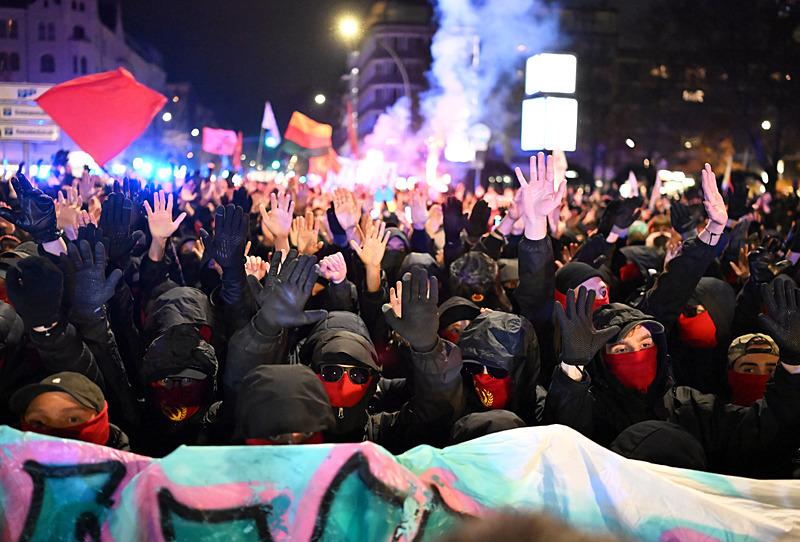
Berlin Police Arrest at Least 20 During Gen Z Protest March
A "Gen Z takes charge" demonstration in the German capital turned confrontational on Saturday, leading to arrests, criminal complaints and injuries to officers.
Berlin police arrested at least 20 people during a Generation Z protest march on Saturday, as a rally organized under the slogan "Gen Z regelt" (Gen Z takes charge) escalated into clashes with officers.
The demonstration drew a mix of young activists calling for greater investment in education, relief from rising living costs and opposition to plans to revive compulsory military service. Pro-Palestine activists also joined the march, and officers reported hearing anti-Israel and anti-police chants, as well as slogans directed at Chancellor Friedrich Merz.
Clashes in a subway car
Video footage posted on social media showed riot officers pushing and striking demonstrators inside a subway car. Police said the incidents included the use of pyrotechnics and that officers were deployed after some participants refused to follow instructions.
By Sunday, authorities had recorded 28 criminal complaints covering offenses including disturbing the public peace, physical assault, resisting law enforcement and violations of explosives regulations. Police said at least three officers were injured, but provided no details on injuries among demonstrators.
Numbers still being finalized
Initial reports on Saturday had put the number of arrests at 22, but a police spokesperson said the data was still being processed and the figures could change. Around 700 officers were deployed to monitor the event.
The protest was part of a broader wave of youth-led demonstrations that have swept Germany in recent weeks. On Nov. 1, more than 200 people were arrested in Hamburg, Frankfurt and Berlin after largely peaceful daytime rallies gave way to violent nighttime clashes involving barricades and radical splinter groups.
Larger protests expected
Organizers are already planning a Europe-wide youth strike for Nov. 20, with significantly larger crowds expected in Berlin and other cities. Authorities in the German capital have registered an expected turnout of 15,000 protesters.
Similar demonstrations are anticipated in France, Italy, Spain, Belgium and Britain, suggesting the movement is becoming a continent-wide pressure point on education funding, social policy and security debates.
Political backdrop
The protests come at a sensitive moment in German politics. Chancellor Friedrich Merz's government has faced criticism from younger voters over austerity-tinged spending plans and proposals to reintroduce compulsory military service. Saturday's chants against Merz show that the unrest is as much about national policy as it is about international issues.
Police and city officials say they are preparing for the Nov. 20 strike and will review tactics after the weekend's confrontations. For now, Berlin remains the focal point of a youth movement that shows little sign of slowing down.