
Germany national team coach Jurgen Klopp has hit back angrily at online commentary questioning whether his squad is white enough to represent the country, a row that flared up following Germany's 1-0 defeat to Greece in the Nations League.
The criticism gained a prominent voice when Kay Gottschalk, deputy leader of the Alternative for Germany, posted side by side images contrasting the West Germany team that won the 1990 World Cup final, made up entirely of white players, with the far more diverse starting lineup Klopp fielded for the national side.
Klopp's Response
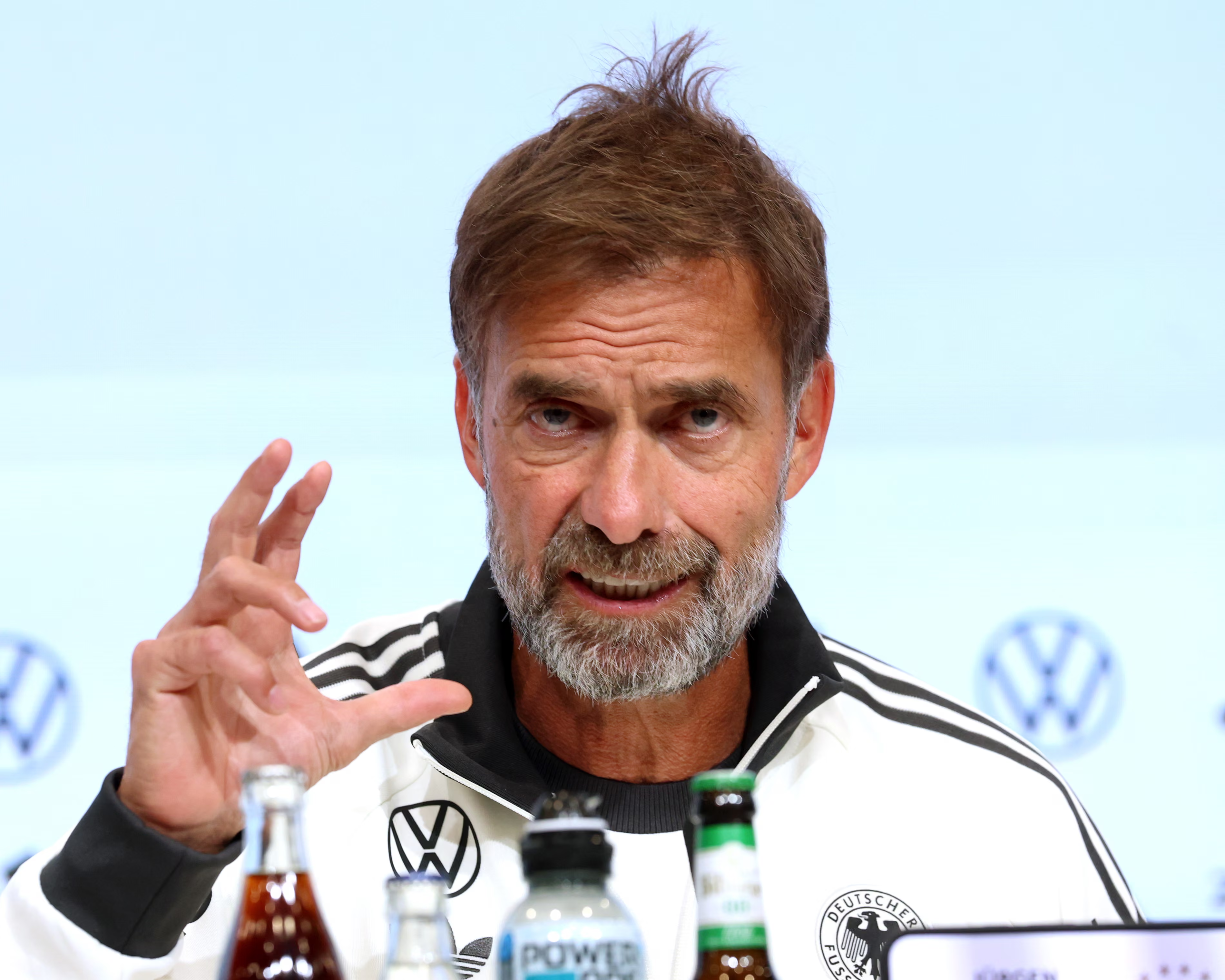
Klopp made clear he had no interest in engaging with the comparison or the sentiment behind it. Speaking at a press conference, he said there was absolutely no reason to pay attention to people making such claims, dismissing the commentary outright and adding that he has little patience for what he called idiocy, especially when it surfaces on social media.
He went further in describing the current squad, saying the group of players he had assembled for the national team camp, including several with migrant backgrounds, could not be more united than they already are, directly rejecting the idea that diversity on the pitch was any kind of weakness.
A Debate Beyond Football
The exchange is the latest example of the AfD's rhetoric extending beyond conventional political debate and into areas like national sports teams, which have long served as a visible symbol of a more diverse, multicultural Germany. Using the 1990 squad as a point of comparison invoked a version of German identity from decades ago, implicitly contrasting it with the country's demographic reality today.
Klopp's blunt refusal to entertain the comparison reflects a position shared by much of German football's establishment, which has generally treated the diversity of the national team as a point of pride rather than controversy, particularly since the multicultural squads that reached major tournament finals in the 2010s.
Why It Matters
The episode shows how debates once confined to state election results and parliamentary clashes are increasingly spilling into cultural institutions like the national football team, one of the country's most visible unifying symbols. Klopp's public dismissal signals that at least within the federation and the dressing room, such arguments are being treated as fringe noise rather than a legitimate question, even as the political movement behind them continues to gain electoral ground.