
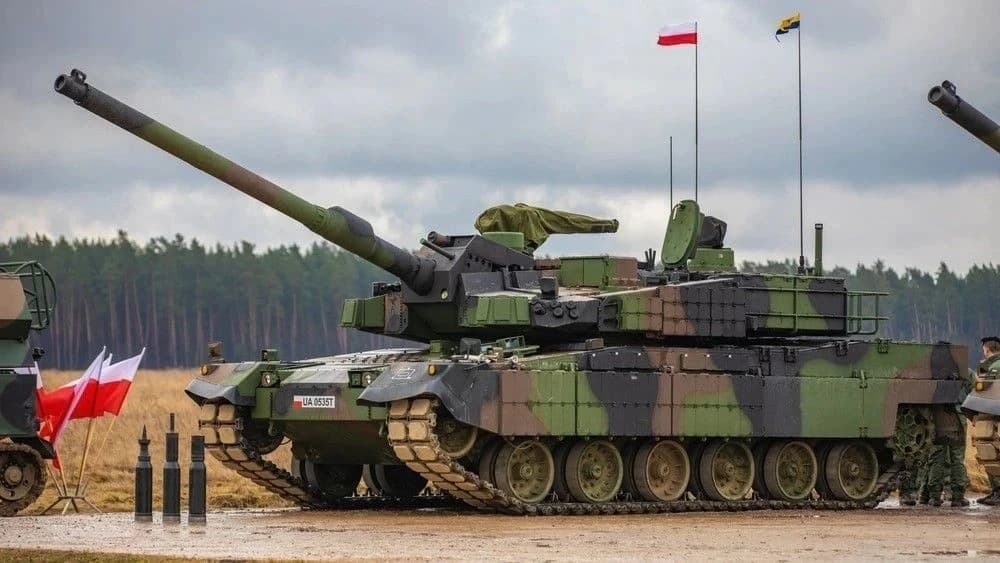
Residents of Lublin have grown used to an unusual late night sound. According to German reporting, columns of American made Abrams tanks have been rolling through the streets of the eastern Polish city after dark, heavy steel tracks rumbling past apartment blocks on their way to and from the training grounds. The tanks belong to the 19th Mechanized Brigade, and their presence says a great deal about where Poland now sees its frontier of danger.
Lublin sits close to the borders with Belarus and Ukraine, in the part of Europe that has felt the war next door most keenly. Arming the brigade based there with some of the most capable tanks in the world is not a coincidence. It is the sharp end of a national decision to turn Poland's east into a fortress.
The Lublin brigade and its new armour
The 19th Mechanized Brigade, often called the Lublin Brigade, forms part of Poland's 18th Mechanized Division, a formation built specifically to guard the eastern flank of NATO. The division has been steadily rearming with the M1 Abrams, the American main battle tank that has become the centrepiece of Poland's land forces, and the Lublin unit has begun taking the newest versions into service.
Earlier deliveries brought the M1A1 variant into Polish hands, and the far more advanced M1A2 in its latest configuration is now arriving for the eastern units. For a brigade that until recently relied on older Soviet era designs, the jump in firepower, armour, and sensors is enormous.
A national rearmament
The tanks in Lublin are one piece of the largest military buildup Poland has undertaken since the Cold War. Warsaw has been spending heavily on defence, ordering hundreds of tanks, artillery systems, and aircraft, much of it from the United States and South Korea, and concentrating the heaviest equipment in the east.
The logic is straightforward. Russia's war in Ukraine convinced Polish leaders that deterrence has to be visible and local, parked within reach of the border rather than promised from far away. Tanks moving through Lublin at night are, in that sense, a message as much as a manoeuvre.
What it means for NATO
Poland's effort matters well beyond its own frontier. The country has positioned itself as the backbone of NATO's eastern defence, the place where the alliance's conventional strength is most concentrated. A heavily armed Polish east changes the calculation for any aggressor and reassures neighbours who feel exposed.
It also raises hard questions about cost and endurance. Fielding and maintaining a modern armoured force is expensive and demands trained crews, spare parts, and years of practice. The sight of Abrams tanks in Lublin shows the ambition is real. Whether Poland can sustain it over the long run is the test still to come.