
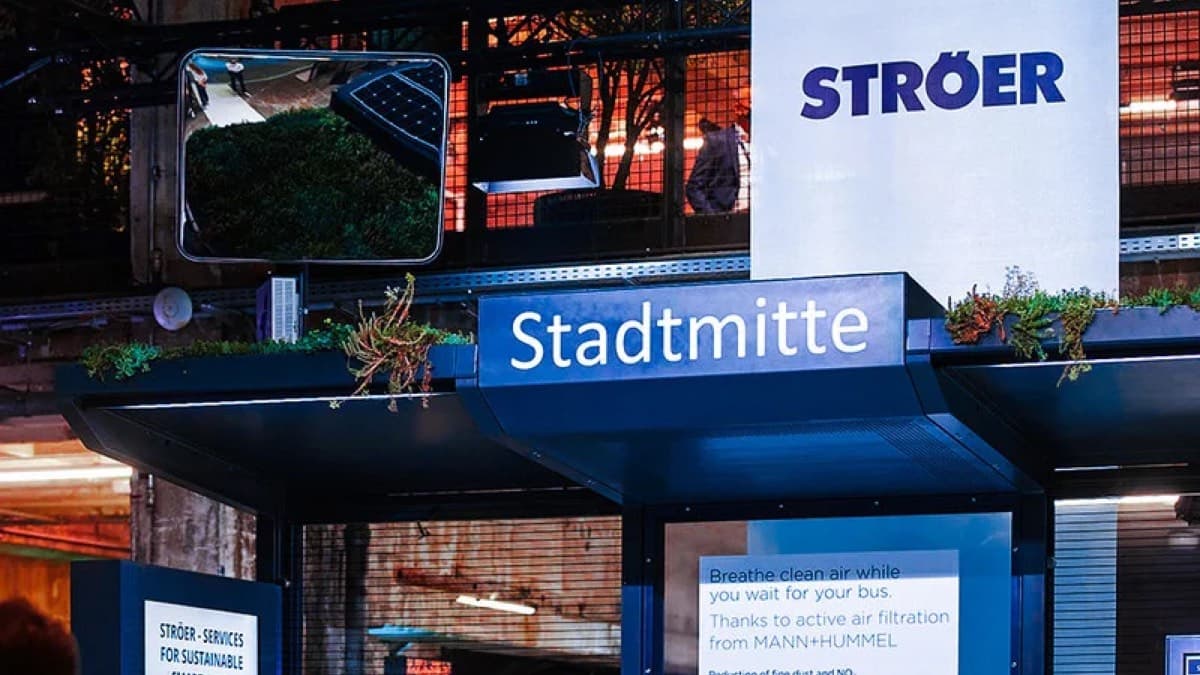
Ströer, the German media group best known for the advertising screens and billboards that line city streets, delivered a solid first half of 2026, with revenue and profit both moving higher. Even so, the market reaction was cool, and the shares slipped as investors looked past the headline growth to the questions lurking underneath it.
Revenue for the first six months came in at about 1.04 billion euros, up 6 percent on the same period last year, while the second quarter reached roughly 542 million euros. Just as important for a company that had been growing slowly, the pace of underlying growth accelerated, with organic revenue rising 2.7 percent over the half after a much flatter 0.5 percent a year earlier.
Billboards go digital
The engine of the performance was the out-of-home media business, the physical advertising space that is Ströer's heartland. That division lifted revenue to around 492 million euros, an 8 percent organic gain, and it did so with an adjusted profit margin above 45 percent, a level most media businesses can only envy. The economics are unusually attractive, since once a screen is in place, extra advertising sold on it costs little more than the rent or the revenue share.
The standout was the shift to digital screens. Digital out-of-home revenue climbed to about 207 million euros, up more than 18 percent, and the automated, programmatic slice of that business surged around 45 percent in the second quarter alone. Chief executive Udo Müller pointed to the returns on the company's most prominent digital sites as spectacular, well above the average for its screens, a sign of where the growth is coming from.
Softer spots in the portfolio
Not every part of the group shone. The digital and dialogue media arm grew revenue but saw its margin squeezed, pressured by a shift toward lower-margin nearshore work, higher minimum wages in its people-heavy call business and the cost of integrating a recent acquisition. Its adjusted profit slipped even as sales rose, a reminder that growth and profitability do not always move together.
The smaller data services and e-commerce operations fared worse, with revenue down more than 11 percent and profit falling sharply. These uneven results, strong in the core but weaker at the edges, were part of what gave investors pause despite the healthy top-line numbers.
Why the shares fell
Several threads came together to weigh on the stock. Some of the strength in the second quarter was borrowed from the third, as around 12 million euros of football World Cup advertising was pulled forward, which makes the months ahead look softer by comparison. At the same time, net debt edged up to close to 1 billion euros and the leverage ratio rose, raising questions about financial flexibility even though the company still aims to bring that figure down by year-end.
Put together, a market that had already pushed the shares higher this year found reasons to take some profit. The results were good, but they were not clean, and the combination of a lumpy quarter, heavier debt and margin pressure in parts of the business was enough to tip the reaction into the red.
The outlook
For all the caution, Ströer stuck to its full-year guidance, signalling confidence that the underlying momentum is intact. Management expects its out-of-home business to keep growing at a mid-single-digit pace in the third quarter, with the digital and dialogue arm holding roughly steady and the smaller data and e-commerce units still declining. The company is also pressing ahead with new advertising technology and continuing a modest share buyback.
The picture that emerges is of a business whose core is in good health and increasingly digital, wrapped around softer edges that are dragging on the overall story. Investors seem willing to reward the billboards but want to see the debt come down and the weaker divisions stabilise before giving the shares more room to run. The second half will show whether Ströer can deliver both at once.