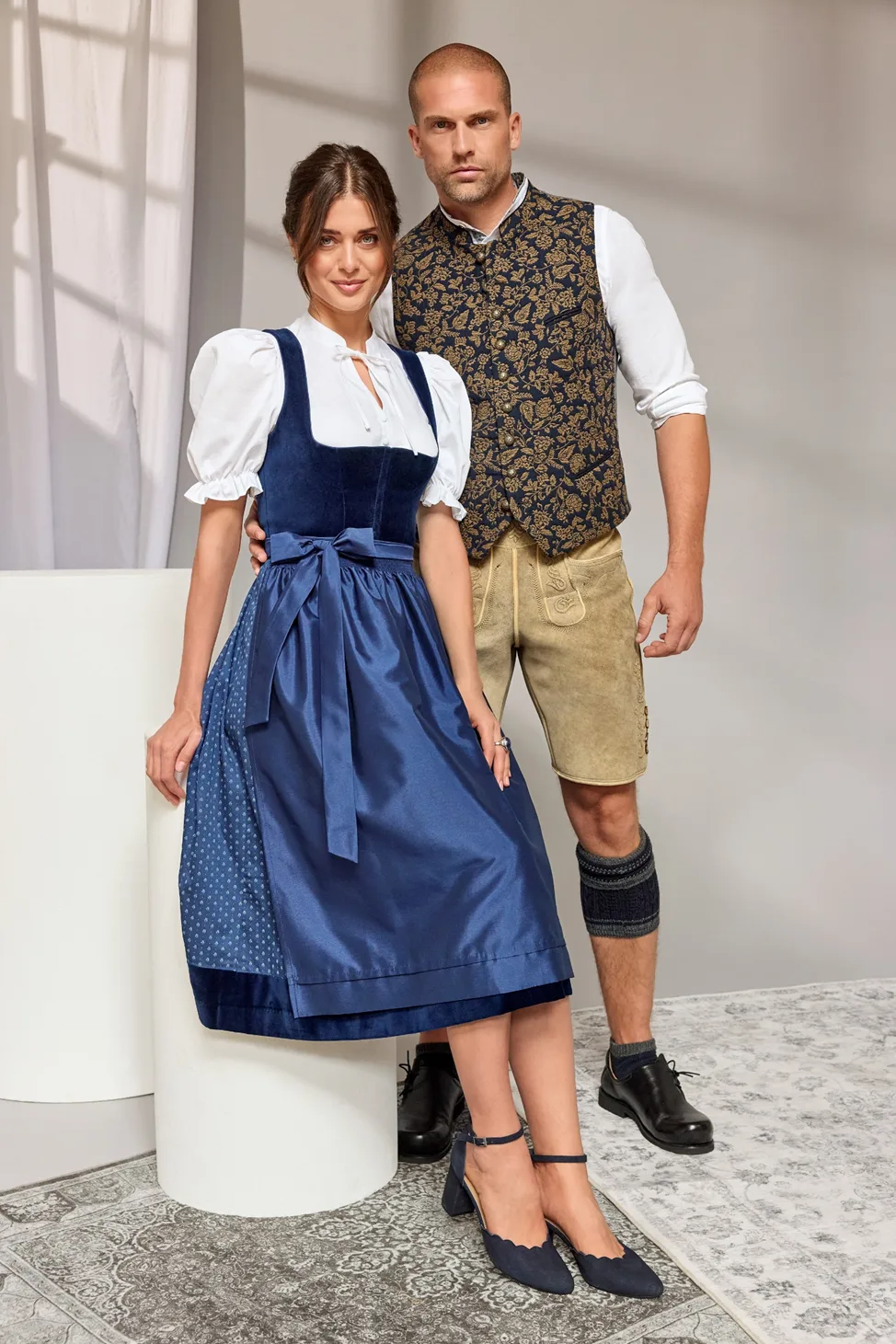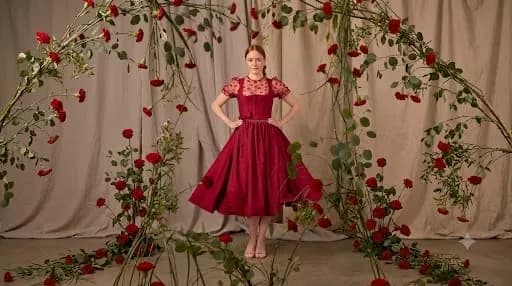
Traditional Bavarian clothing is often described as folklore, yet in Munich it also functions as a sophisticated cultural economy. A dirndl or a pair of lederhosen connects fashion, craftsmanship, retail, hospitality and tourism in a single purchase. During the Oktoberfest season, millions of visitors arrive in the city, many wanting not only to observe Bavarian culture but to take part in it. Clothing becomes the most immediate way to enter that experience, and specialist houses such as Angermaier help translate a regional tradition for an international public.
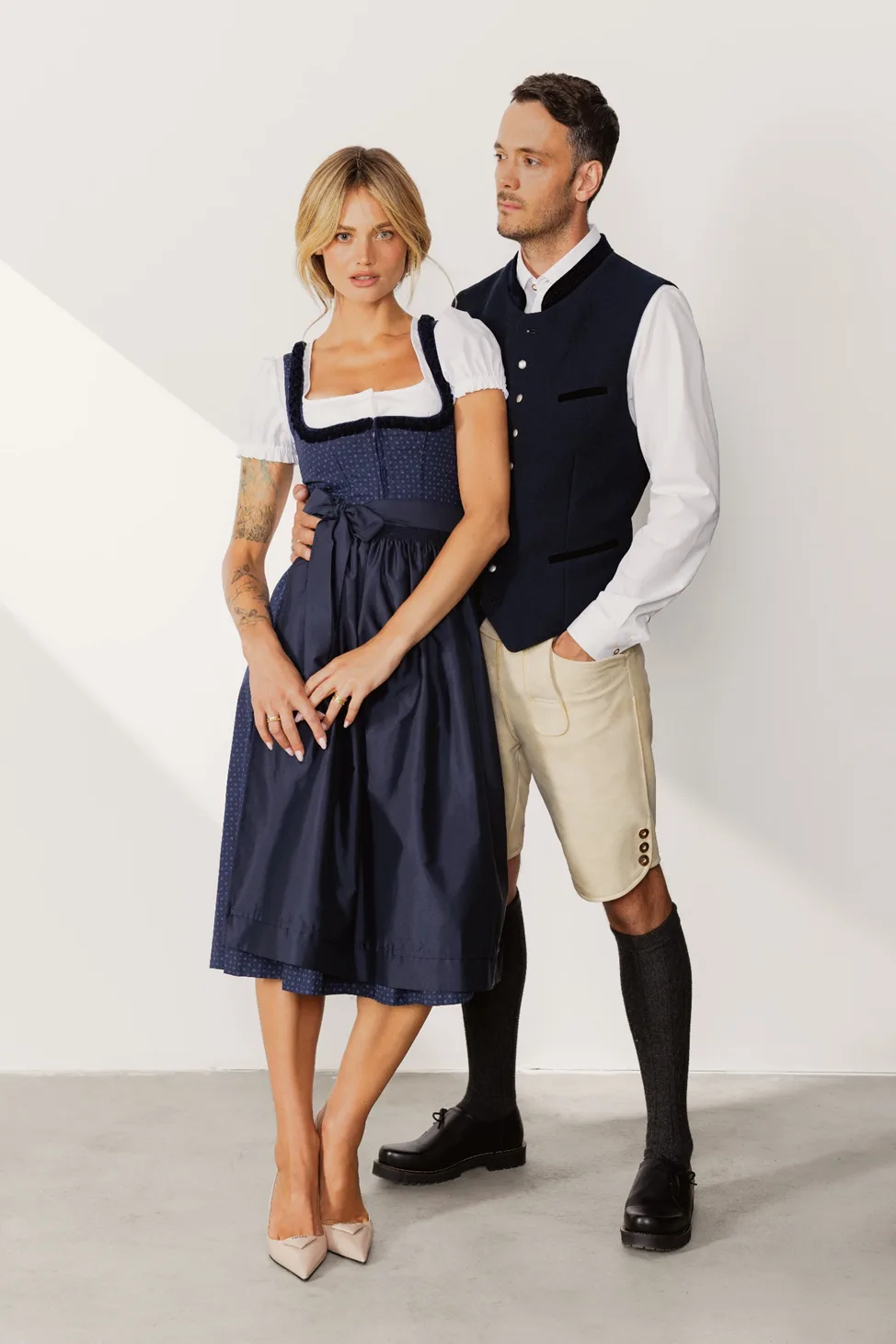
Trachten Angermaier Dress
Under managing director Dr. Axel Munz, Angermaier has played a visible role in moving Tracht beyond the costume category. Founded in 1948, the family business helped popularize complete Oktoberfest outfits at accessible price points long before the current revival. That approach widened the market without abandoning the codes that make Bavarian dress recognizable. Today, the company serves locals and tourists through its presence in Munich, Stuttgart and Berlin, while its collections place classic silhouettes beside seasonal design, celebrity collaborations and contemporary styling.
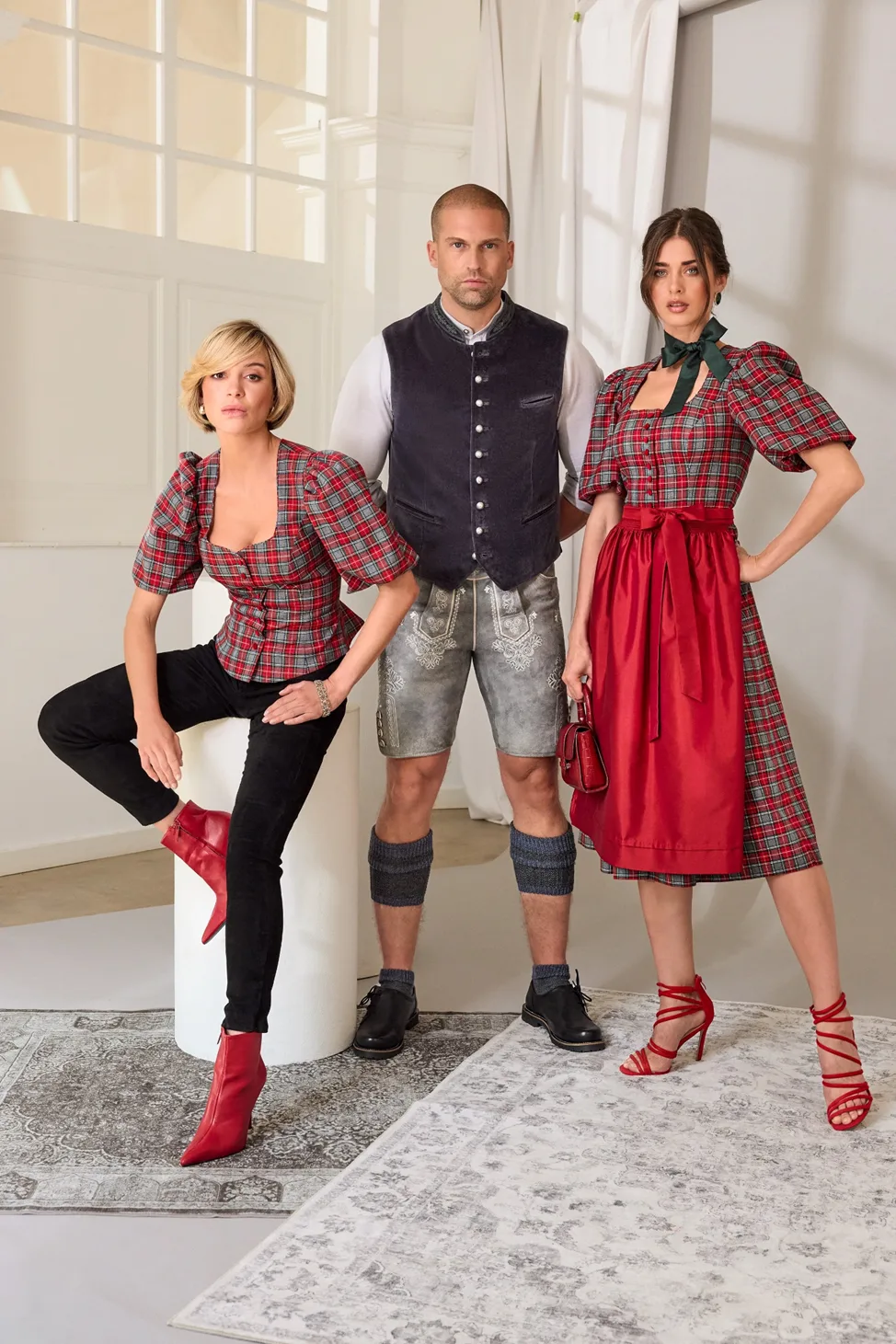
Trachten Angermaier Dress
The economic importance of this work is broader than one retailer’s sales. Munich’s visitor economy supports hotels, restaurants, transport, entertainment and shopping, while the visual identity of the city is one of the reasons visitors choose it. Tracht is part of that identity. When travelers buy a well-made outfit, book a fitting, attend an event and later wear the pieces again, cultural heritage generates value across several sectors. Angermaier’s collaborations, high-profile events and internationally reported showpieces have helped turn that local visual language into exportable brand recognition.