
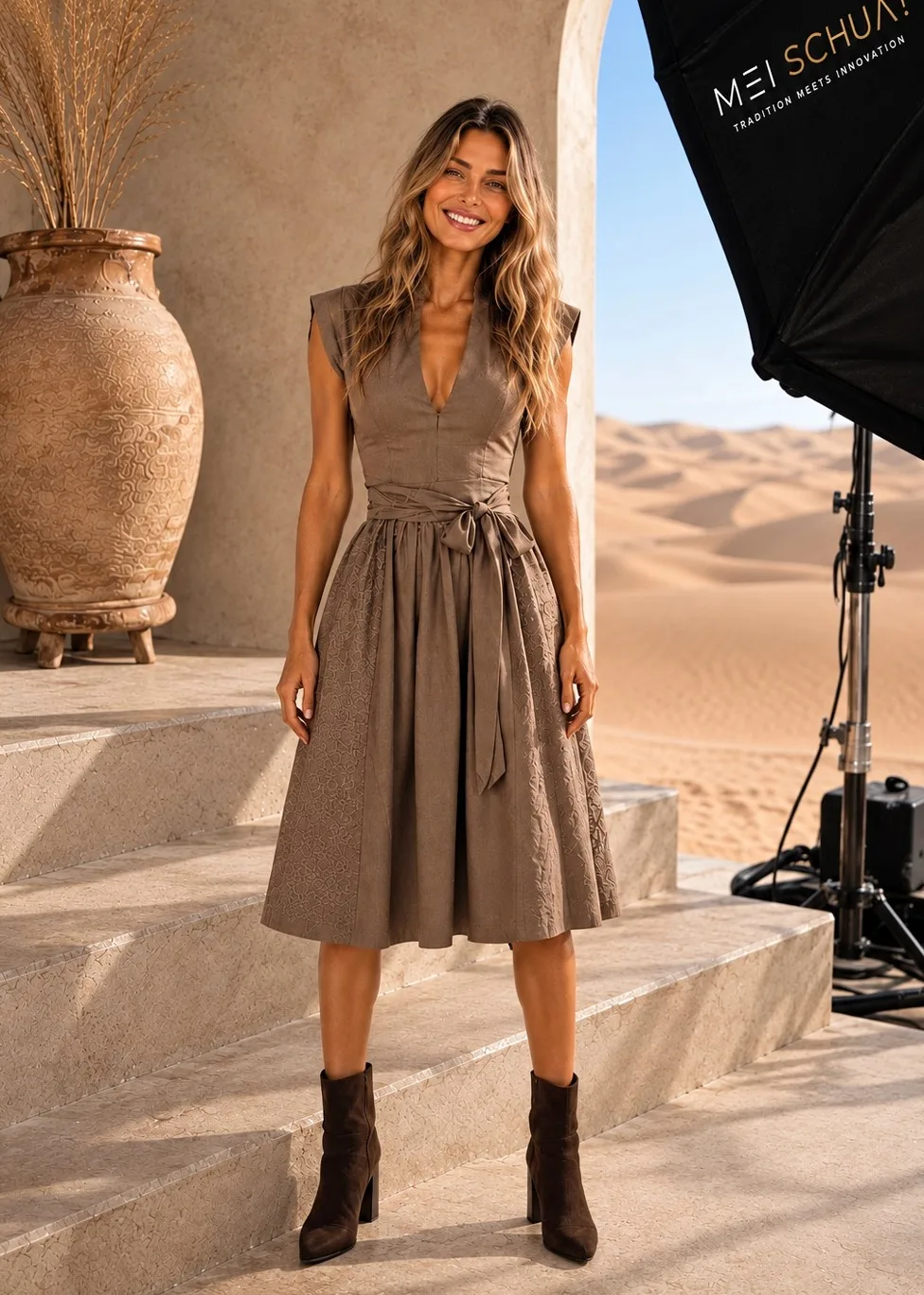
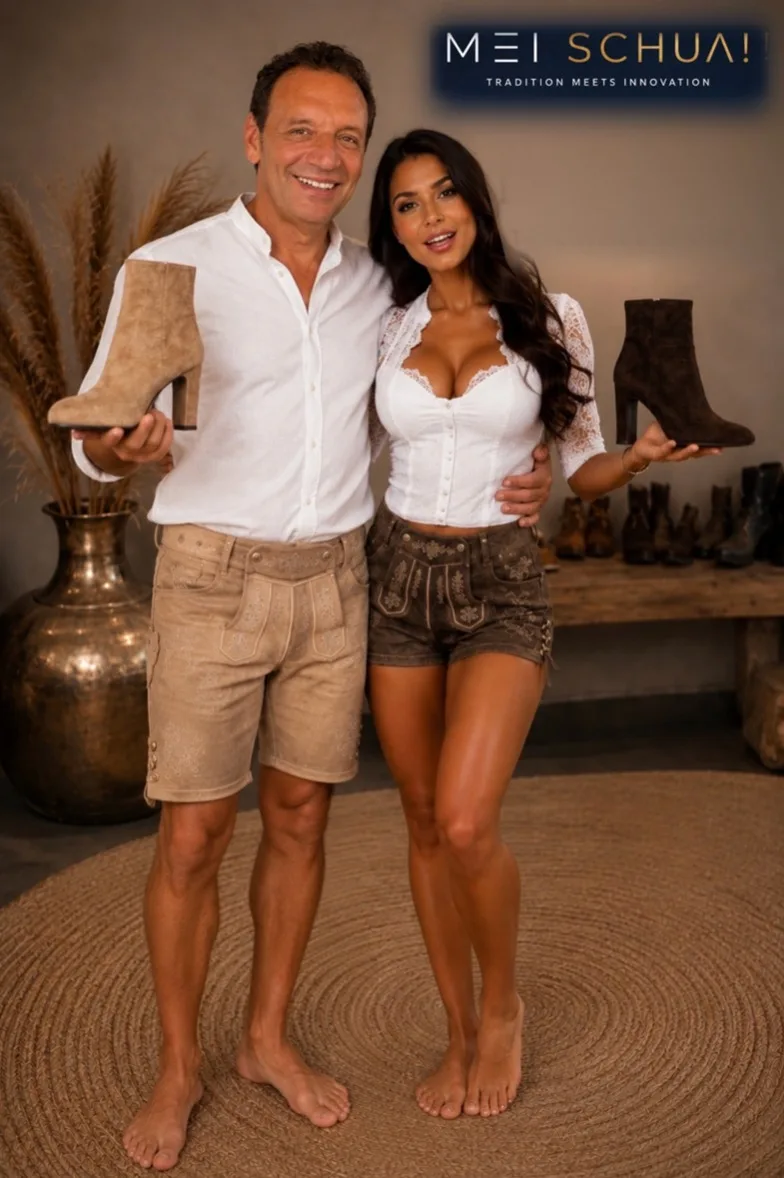
 The collection makes that intention visible. There are classic men’s shoes alongside contemporary Haferl-inspired models, but the range also includes feminine ankle boots and elegant footwear designed to work with much more than a Dirndl. That distinction matters because it changes the role of traditional footwear. Instead of being an item taken from the wardrobe only for Oktoberfest, a festival, a wedding or another Tracht occasion, a shoe can become part of everyday personal style. The Alpine reference remains, but it is not necessarily the dominant element of the entire outfit. MEI SCHUA! is interested in that middle ground, where heritage is recognizable without turning the wearer into a representation of tradition.
For Michael Lorum, the person behind the label, the starting point is always the shoe itself. His professional career in footwear includes design, product development and manufacturing, and his role as CEO of Switzerland-based PLD AG places him inside an international production network. That experience influences the way he looks at traditional footwear. Rather than beginning with a purely visual idea, he considers how the finished product will perform once it reaches a customer. A shoe should look right, but it should also feel right and remain comfortable after hours of wear. Lorum describes the secret of a MEI SCHUA! shoe not as one isolated feature but as a combination of elements: the look, the materials, the details and especially the fit. It is a product-oriented approach that places comfort alongside fashion rather than treating it as an afterthought.
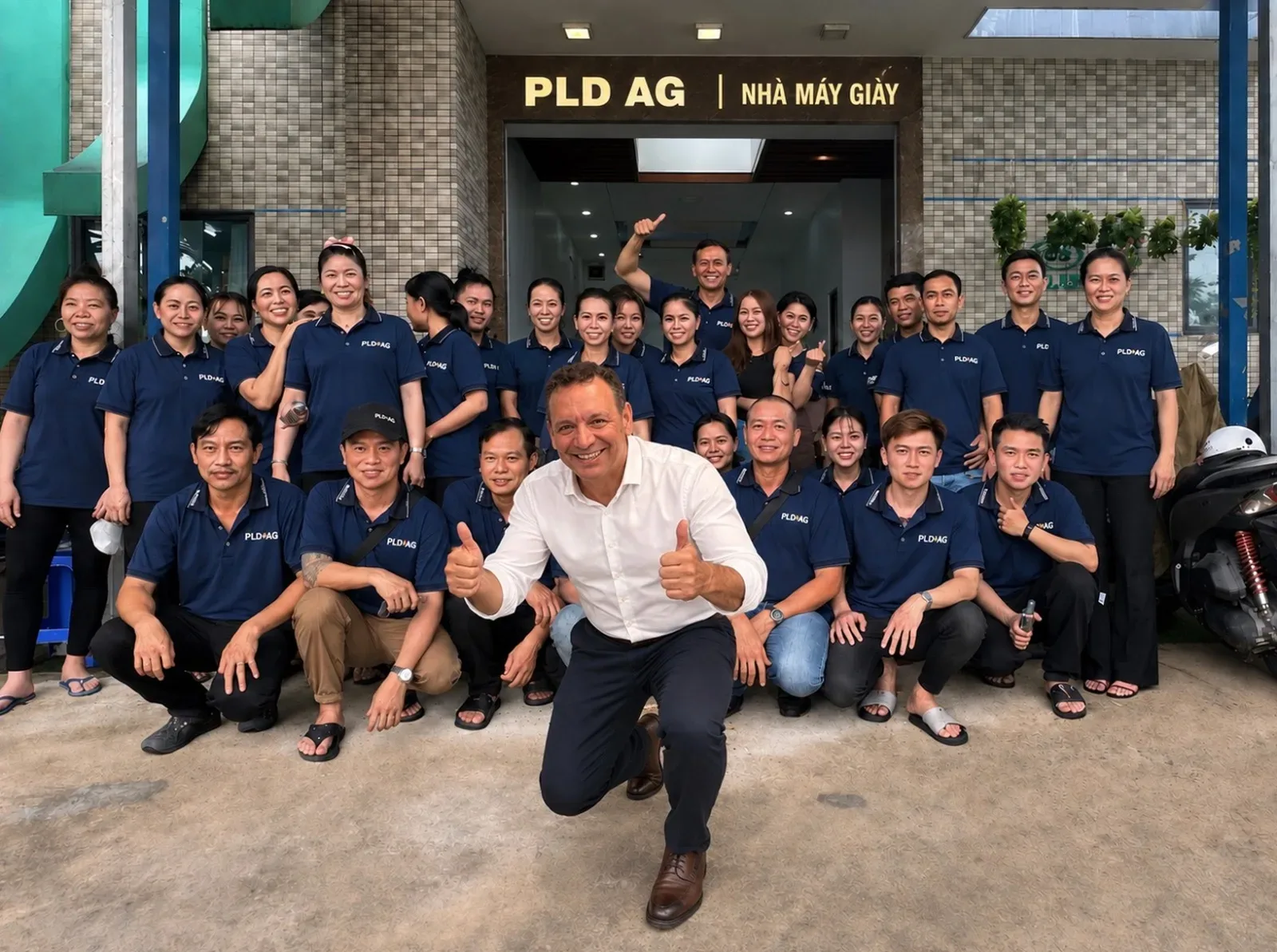
 There is an international dimension behind the apparently regional character of the collection. Lorum’s footwear background gives MEI SCHUA! access to established sourcing and production expertise. Within the PLD AG network, footwear is produced for retailers and brands around the world, with approximately nine million pairs of shoes produced annually according to the company. Part of that production operation is connected to Vietnam, a setting that appears far removed from the Bavarian and Alpine world represented by the collection. Yet this contrast is central to the way Lorum understands the brand. The cultural inspiration may be rooted in Bavaria and the Alps, but the technical knowledge required to transform sketches, colours, materials and lasts into finished footwear comes from an international industry.
The same mixture of local identity and wider reach can be seen in MEI SCHUA!’s relationships within traditional fashion. Its connection with Dr. Axel Munz and Angermaier began professionally and developed into a friendship. Lorum regards Munz as a significant personality in the Tracht scene, particularly because of his enthusiasm for traditional fashion and his ability to connect people. Through collaborations, events and the network surrounding traditional fashion, MEI SCHUA! began appearing on personalities from entertainment, sport and international show business. The journey from Munich towards Hollywood illustrates how far a product rooted in Alpine heritage can travel when it is presented as fashion rather than simply costume. MEI SCHUA! is still a young label, but its direction is clear: traditional footwear can carry its history with it while becoming part of a much wider contemporary wardrobe.