
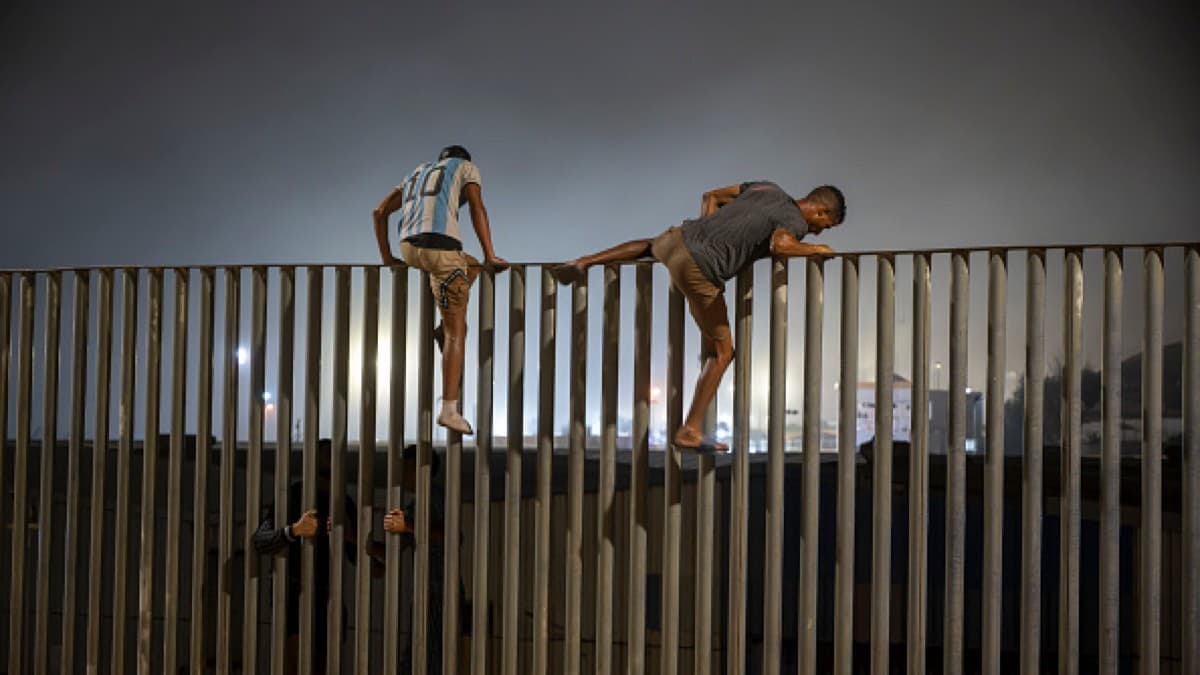
Germany has thrust itself into a migration crisis unfolding on the far southern rim of Europe, with Chancellor Friedrich Merz demanding that Morocco take back people who crossed into the Spanish enclave of Ceuta. Speaking on Thursday, Merz said the migrants who reached the tiny territory should be returned to Moroccan soil without delay, a blunt intervention that placed Berlin squarely behind Madrid.
The chancellor framed the issue as a test of Europe's ability to hold its external border. He said he welcomed Spain's intention not to let the arrivals move on to the European mainland, and he added that Germany expects Morocco to take the migrants back immediately. The language left little room for negotiation and reflected a mood in Berlin that has hardened sharply on questions of irregular arrivals.
A crisis at Europe's African foothold
Ceuta is one of two small Spanish cities that sit on the North African coast and share a land border with Morocco, which makes them a rare point where the European Union physically meets the African continent. That geography has long made the enclave a pressure point, and in recent days thousands of people crossed into it, overwhelming the authorities and setting off days of unrest before the situation was brought back under control.
The scenes around the border were tense. Moroccan authorities detained dozens of people in connection with violence near the frontier, and order was restored only after a difficult stretch. For Spain, the surge revived memories of earlier episodes in which large numbers reached Ceuta in a short span, straining shelters and services in a city of modest size.
Berlin steps in behind Madrid
It is unusual for a German chancellor to speak so directly about a border crisis on Spanish territory, and the move signals how far migration has climbed up the agenda across the bloc. By backing Madrid and pointing the finger at Rabat, Merz cast the episode not as a purely Spanish problem but as a shared European one, in which the failure to control one stretch of the frontier becomes everyone's concern.
The demand also puts Morocco in an awkward position. Rabat has often held real sway over these flows, and European governments have leaned on it before to tighten its side of the border. Merz's insistence that the migrants be taken back at once is a public reminder of how much Europe relies on cooperation from countries beyond its edge to manage who reaches its shores.
A chancellor with a point to prove
The intervention fits a pattern Merz has set since taking office last year at the head of the European Union's largest economy. He has promised a tough approach to irregular migration, an issue that has reshaped German politics and helped drive support toward the far right. The rise of the AfD has pushed the mainstream to talk and act more firmly on borders, and Merz has positioned himself as the figure who can answer that anxiety without ceding ground to the party feeding on it.
Speaking out over Ceuta lets the chancellor show that resolve on a stage beyond Germany's own frontiers. It is a message aimed at voters at home as much as at governments abroad, a signal that Berlin intends to be a driving voice in how the bloc polices its outer boundary rather than a bystander reacting after the fact.
What happens next
For now the immediate emergency around Ceuta has eased, but the underlying strain has not. The enclave remains a magnet precisely because it offers a foothold on European soil, and the forces pushing people toward it, from economic hardship to instability further south, are not going away. Whether Morocco moves quickly on Merz's demand will be an early test of how much weight Berlin's voice carries in a corner of Europe far from its own borders.
The larger question is whether episodes like this harden the bloc's collective stance or expose its divisions. Merz is betting that a firm, unified line will hold, and that leaning on partners such as Morocco is the price of keeping the external border intact. Ceuta, small and remote as it is, has become the latest place where that bet is being tested in full public view.