
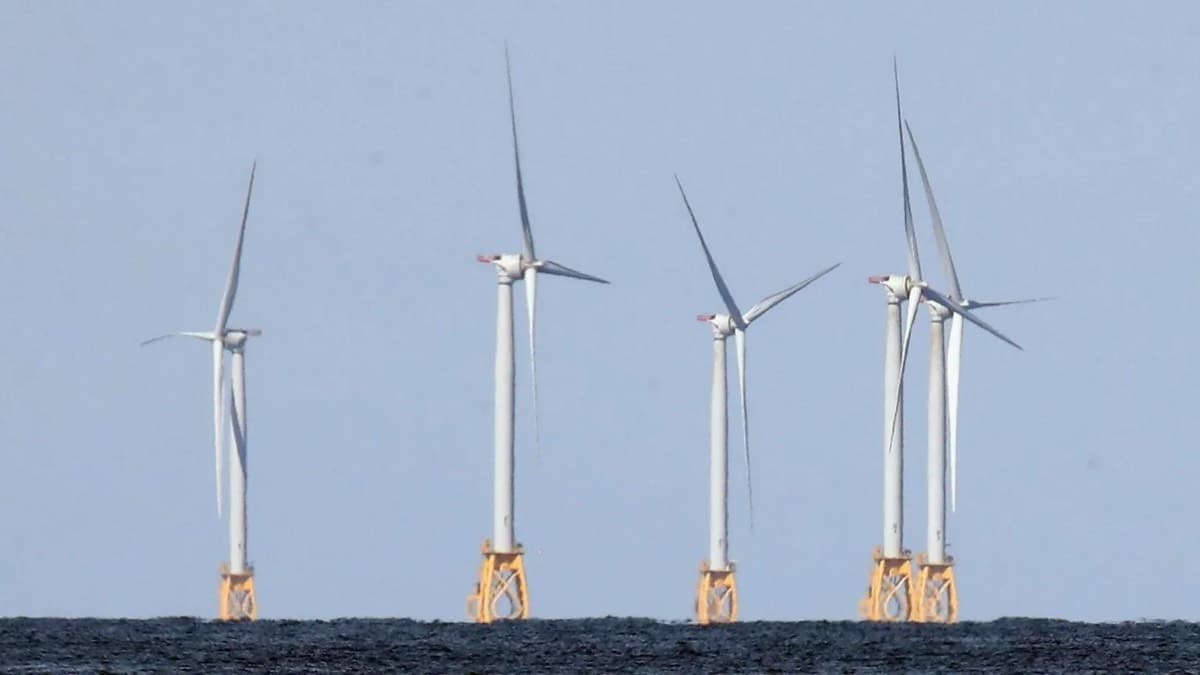
The German energy company RWE has struck an unusual bargain with Washington, agreeing to abandon its offshore wind ambitions in the United States in return for a payment of roughly 1.2 billion dollars. The money comes from the Department of the Interior, and the deal marks another step in the Trump administration's drive to unwind the country's offshore wind sector rather than expand it.
Under the arrangement, RWE gives up the leases it held to develop wind farms off the coasts of California and Louisiana as well as in the New York Bight, the stretch of Atlantic water between New York and New Jersey that had been earmarked for major projects. In one move, a company that had positioned itself as a serious player in American offshore wind is stepping back from the market entirely.
From wind to gas
What RWE intends to do with the money underlines how sharply the ground has shifted. The company has signalled that it will redirect the sum toward conventional energy, with about 900 million dollars going into a liquefied natural gas export terminal in Louisiana. A payment meant to retire clean power projects is, in effect, being recycled into fossil fuel infrastructure.
For RWE the calculation is pragmatic. With the political climate in Washington turned firmly against offshore wind, the leases had become assets whose value was in doubt, and a guaranteed payout plus a pivot into gas offers a cleaner path than fighting a hostile administration for years. The logic is commercial, even if the outcome runs against the company's green image at home.
A pattern, not a one-off
The RWE agreement is not an isolated case. It is the fifth deal of its kind that the Interior Department has reached, part of a deliberate policy of offering companies money to walk away from renewable projects. Taken together, those buyouts have now committed close to 4 billion dollars of public money to stopping offshore wind rather than building it.
Officials have framed the approach as common sense, casting offshore wind as costly and unwelcome and presenting the payments as a way to clear the waters of projects the administration does not want. Earlier this year a similar deal saw the French company TotalEnergies paid around 1 billion dollars to drop its own American offshore wind leases, a sign that the strategy is being applied to foreign energy majors across the board.
What it means for Europe
The episode lands awkwardly for a German champion of the energy transition. RWE has been central to Europe's push into renewables, and seeing it accept public money to kill wind projects and build a gas terminal instead is a jarring image, even if the decision is driven by American politics rather than a change of heart in Essen. It shows how far conditions in the United States now diverge from those in Europe.
It also hands European policymakers a talking point about the reliability of the American market for clean energy investment. When a government is willing to spend billions to cancel projects it dislikes, companies weighing where to put their capital have every reason to look for steadier ground. For Germany, watching one of its largest energy firms retreat from Washington's waters is a reminder of how quickly a shift in political will can rewrite the map of the energy business.
The bigger picture
For the Trump administration the deal is another trophy in a campaign that has already reshaped the outlook for American offshore wind, an industry that only recently looked poised for rapid growth. Each buyout removes projects from the pipeline and signals to the rest of the market that the federal government is prepared to pay to keep them from being built.
For RWE the immediate result is a large cheque and a tidy exit, redeployed into gas at a moment when demand for it remains strong. The longer question is what happens to the American offshore wind sector once several of its biggest developers have been paid to leave, and whether the projects now being cancelled will ever be revived if the political winds change again.