
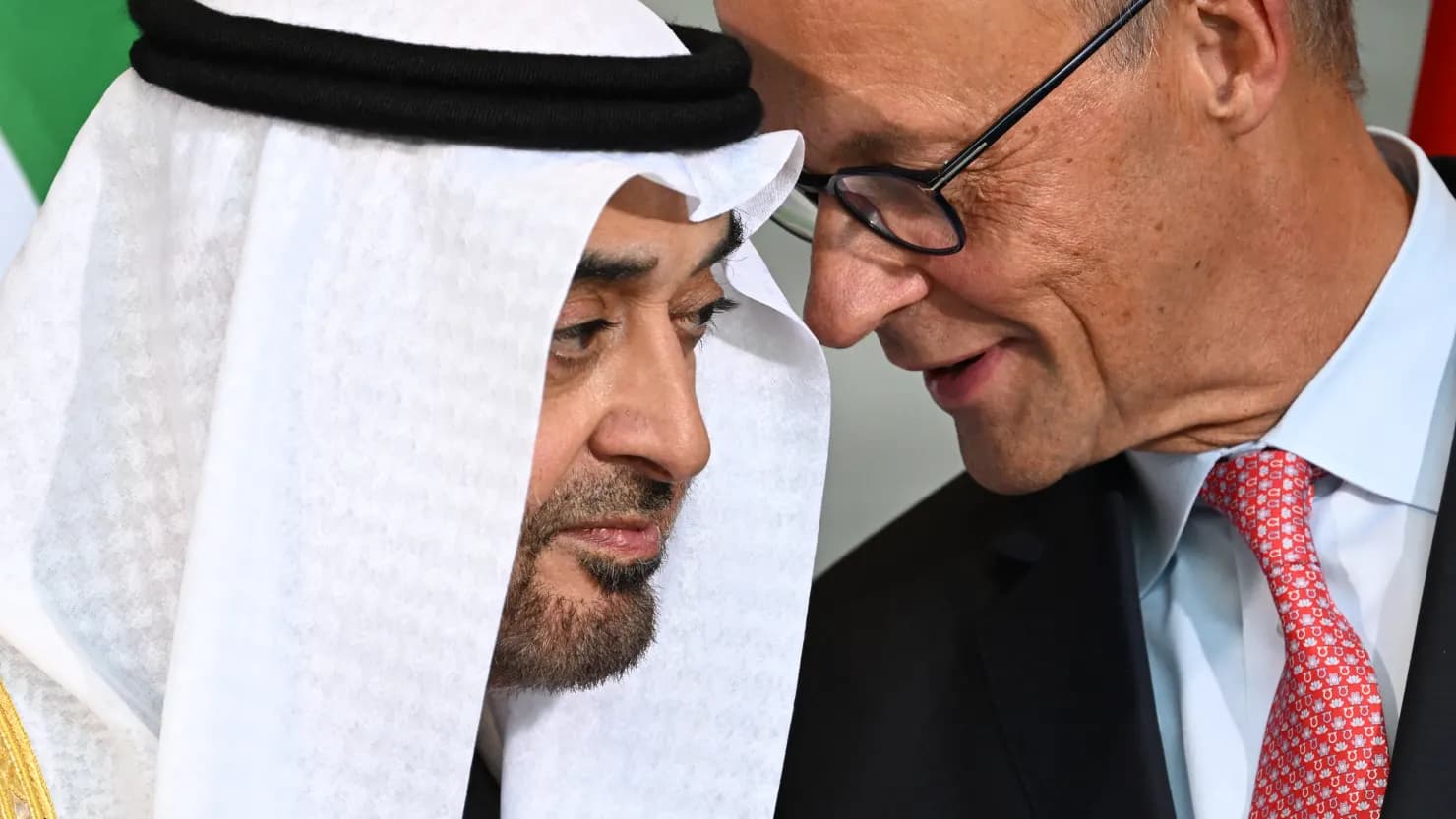
The United Arab Emirates has pledged to invest roughly 40 billion euros, close to 46 billion dollars, in Germany, with digital infrastructure and artificial intelligence capacity forming the centerpiece of the package. The commitment was announced during a state visit by UAE President Sheikh Mohamed bin Zayed Al Nahyan, who met with Chancellor Friedrich Merz in Berlin.
The scale of the pledge marks one of the largest single foreign investment commitments Germany has secured in recent years, and signals a deepening economic relationship between Berlin and Abu Dhabi that extends well beyond the energy ties that have traditionally defined Gulf investment in Germany.
Data Centers at the Core
At the heart of the package is a commitment to build out roughly one gigawatt of new data center capacity in Germany, a substantial addition aimed at supporting the country's growing artificial intelligence and cloud computing needs. The investment spans artificial intelligence, digital infrastructure and energy more broadly, reflecting Abu Dhabi's strategy of pairing capital with strategic technology partnerships rather than pursuing passive financial stakes alone.
Roughly 10 billion euros of the total package is earmarked specifically for Bavaria, a state that anchors much of Germany's advanced manufacturing and technology industry, positioning the investment to plug directly into an existing industrial and engineering base rather than building infrastructure from scratch in an unfamiliar market.
A Formal Investment Council
Beyond the headline figure, the two governments signed a joint declaration of intent to establish a German-UAE Investment Council, a body intended to coordinate future investment activity and deepen engagement between public institutions and private companies on both sides. That structure suggests the 40 billion euro package is meant as a starting point for an ongoing relationship rather than a single, isolated deal.
Alongside the economic announcements, the two countries also said they would deepen defense cooperation, broadening a relationship that already extends into security and military ties beyond the purely commercial dimension of the visit.
Why It Matters
For Germany, the investment arrives at a moment when the government has been publicly pushing for faster, more visible progress on economic growth, making a large scale foreign commitment focused on AI infrastructure a useful signal that the country remains an attractive destination for capital despite years of sluggish domestic growth.
For the UAE, the deal fits a broader pattern of directing sovereign and state linked capital into strategic technology infrastructure across major economies, building influence and access in sectors like AI computing that are likely to matter far more to global economic power in the coming decade than traditional energy investments alone.