
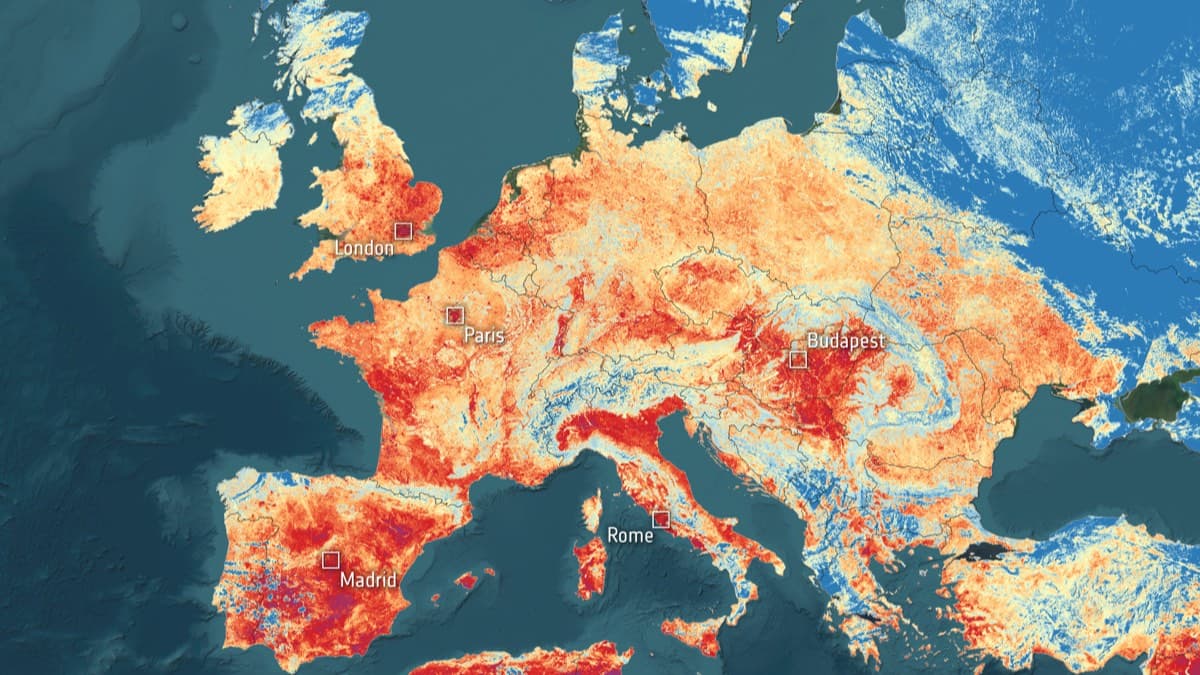
As Europe bakes through another punishing summer, a leading independent assessment has concluded that the European Union is easing off on climate action rather than pressing harder, and it lays much of the blame at Germany's door. The Climate Action Tracker, a project run by the research groups NewClimate Institute and Climate Analytics, says the bloc is unpicking parts of its own rulebook at the very moment the case for urgency is written across the landscape.
The tracker keeps its rating of the EU's overall effort at insufficient, meaning the bloc's policies fall short of what a safe climate pathway requires. What has changed is the direction of travel. Instead of tightening its approach, Brussels has been softening it, a shift the analysts warn could echo well beyond this decade.
Where the EU is loosening its grip
The assessment points to a cluster of retreats. The bloc has weakened its plan to phase out new fossil fuel cars around 2035, floated a slower timetable for cutting emissions under its flagship carbon market, and opened the door to counting international carbon credits toward its 2040 target rather than delivering all of those cuts at home. It has also watered down parts of its rules on methane, a potent greenhouse gas.
Each move on its own might look like a technical adjustment. Taken together, the analysts argue, they add up to a meaningful loosening of ambition, and leaning on offsets bought abroad in particular risks masking a lack of real reductions inside Europe's own borders. The worry is that flexibility becomes a substitute for genuine change.
Germany in the spotlight
The report is unusually direct about Berlin's part in all this. It describes Germany's slowdown on zero-emissions transport and its support for international offsets as instrumental in the EU's decision to weaken its stance. Recent choices in Berlin, the tracker says, threaten to slow the expansion of renewable power and the drive to clean up the country's buildings, and its projected emissions for 2030 are now higher than earlier estimates suggested.
The language from the analysts is pointed. Finn Hossfeld of the NewClimate Institute, who leads the tracker's work on Germany, said the country continues weakening climate policies across the board, and warned that Germany is prolonging its dependence on imported fossil fuels even as Europe burns. It is a charge that cuts against Germany's long-standing image as a green leader on the continent.
A warning wrapped in economics
The critique is not only about the climate itself. Michael Petroni of Climate Analytics, who leads the tracker's EU analysis, said the bloc's energy transition remains incomplete and that further delay carries economic and geopolitical risks as well as environmental ones. In that framing, dragging out the shift away from fossil fuels leaves Europe exposed to volatile imports and cedes ground in the industries that will define the coming decades.
That argument matters politically, because it reframes climate action as a question of competitiveness and security rather than sacrifice. The analysts are effectively telling European governments that slowing down does not buy safety, it simply postpones costs while the physical damage keeps mounting.
The backdrop of a burning continent
The timing gives the findings their sting. The report lands amid a season of devastating wildfires, repeated heatwaves, rivers running dry and drought biting into farmland across Europe. The gap between what the science demands and what policy is delivering has rarely been so visible, with the consequences playing out in real time from the Mediterranean to the north.
Europe is not alone in the tracker's survey. The analysts note early signs of falling emissions in China's power and transport sectors, keep Turkey rated as critically insufficient, and downgrade Brazil over its continued expansion of oil and gas. But for a bloc that has cast itself as the world's climate standard-bearer, the message about Europe, and about Germany within it, is the one that stings most.
What it means for Berlin
For Germany the assessment is an uncomfortable mirror. A country that built political capital on leading the energy transition is now being named as a brake on it, and the tension between that legacy and its recent choices is only likely to sharpen as the effects of a hotter climate intensify. How Berlin responds will shape not just its own emissions but the ambition of the entire bloc.
The tracker's conclusion is less a forecast than a warning. Europe still has the tools and the wealth to change course, but the window is narrowing, and every year of delay makes the eventual adjustment steeper. Whether the continent treats this summer as a wake-up call or as background noise will determine how much of the report's grim framing comes true.