
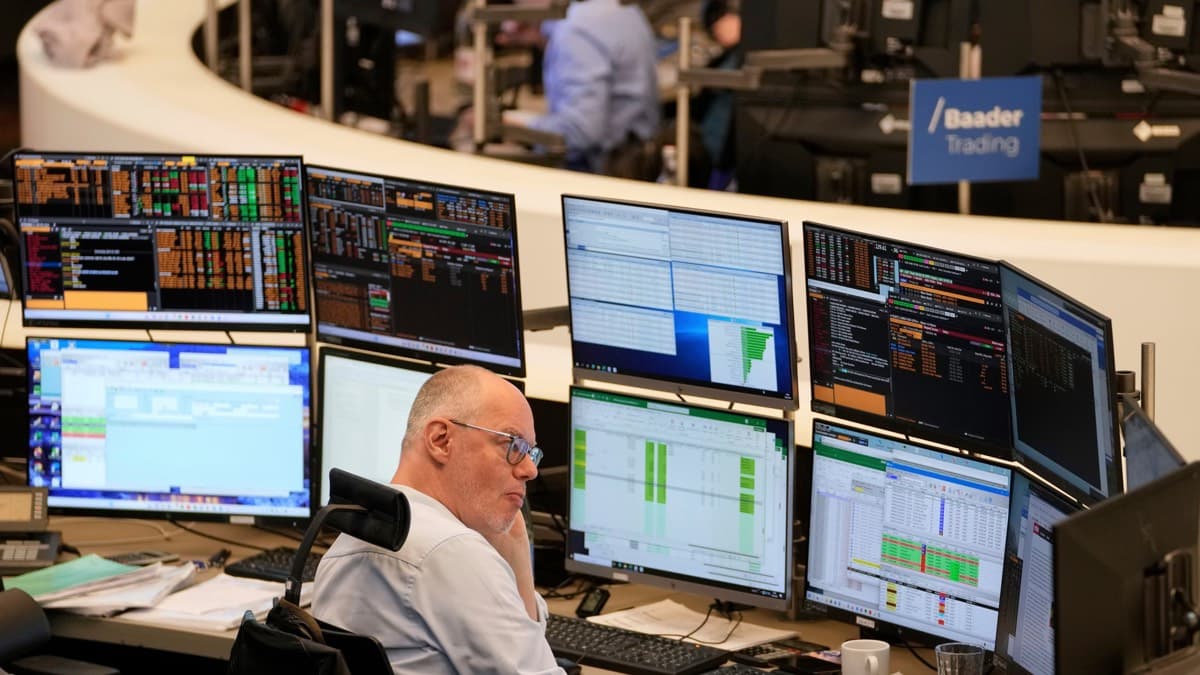
The cost of government borrowing is rising sharply across the wealthy world, and the pressure has now reached Germany. A broad slump in bonds has pushed long-term yields to levels not seen in years, and in some cases decades, as investors demand a higher return to lend to states that are borrowing more and more.
The move is global rather than local. Yields on 30-year debt in the United States have climbed to their highest since 2007, French borrowing costs sit at levels last seen in 2008, and long-dated German yields have risen to where they were in 2011. In Britain equivalent yields are edging toward 6 percent, while in Japan they are close to an all-time high. When the price of money rises this widely, it points to something bigger than any one country's politics.
What is driving the sell-off
Several forces are pulling in the same direction. Governments are running large deficits and issuing ever more debt to cover them, which floods the market with bonds and pushes their prices down and yields up. At the same time, inflation has proved stubborn enough to keep investors wary, and uncertainty about the path of interest rates has added to the unease.
The United States sits at the centre of the story, where a recent sale of 30-year bonds went at an interest rate above 5.2 percent, the most the government has paid at such an auction since 2001. Heavy federal deficits, a wave of corporate borrowing and questions about monetary policy under the new Federal Reserve leadership have all fed the climb, and because American yields set the tone for the world, the effect radiates outward.
Germany feels the pull
For years German government bonds, known as Bunds, were the ultimate safe haven, prized for their stability and their low yields. That reputation has not vanished, but even Germany is now paying more to borrow, with its long-dated yields back at 2011 levels. Part of that reflects the global tide, and part reflects a change at home, as Berlin has loosened its famous caution on debt to fund heavy spending on defence and infrastructure.
That extra spending means more Bunds coming to market, and more supply tends to mean higher yields. For a country that built its economic identity on fiscal discipline, the shift is significant, and it shows how even the most conservative borrower is being carried along by the same currents lifting rates everywhere else.
Why it matters
Rising yields are not just a concern for traders. When governments pay more to borrow, a larger share of their budgets goes to servicing debt rather than to services or investment, which tightens the room for everything else they might want to do. The average yield on a benchmark basket of investment-grade government bonds has jumped to almost 4.5 percent, the highest in records going back to 2015, a sign of how much the cost of public money has climbed.
The pressure spreads well beyond state finances. Government bond yields act as a benchmark for borrowing across the economy, so higher yields tend to feed through to mortgages, business loans and the cost of capital everywhere. A sustained rise makes life harder for anyone who needs to borrow, at the very moment many economies are already straining.
What comes next
Whether this proves a lasting shift or a passing spike will depend on inflation and on whether governments can convince markets they have their deficits under control. If borrowing keeps growing while price pressures linger, investors are likely to keep demanding more to hold long-dated debt, and yields could stay elevated. If confidence returns, some of the recent climb could unwind.
For now the message from the bond market is one of caution. The steady rise in yields, spanning the United States, Europe, Britain and Japan alike, is a collective verdict that the era of cheap government borrowing is over for the moment. Germany, long the model of restraint, is discovering that it is not exempt from the reckoning.